
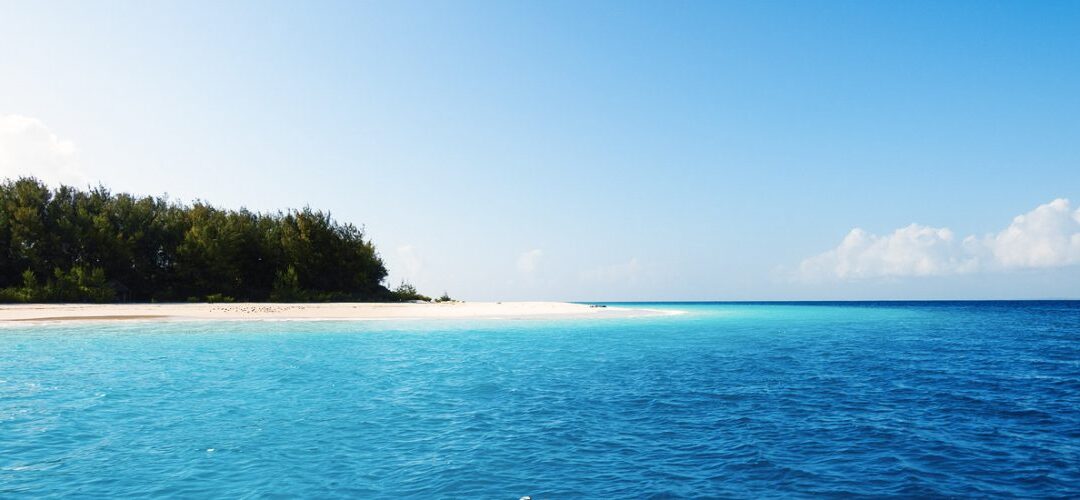
Trip to Zanzibar what to know
If you are planning a trip to Zanzibar, you should absolutely know that this will not be a trip like any other.
Zanzibar is a special place where the immensity of the African sky merges with the Indian Ocean characterized by the phenomenon of the tides, and where life flows according to the rhythm of the field field.
Trip to Zanzibar what to know: in this guide you will find all the useful advice for organizing your trip to Zanzibar, from the necessary documents to the means of transport, up to how to buy a local SIM and other useful tips. These are some of the questions I will answer in this article, written specifically to best prepare you for your trip!
Practical advice for organizing a trip to Zanzibar
This is a practical list of what is best to do before departure but also during the trip, as well as suggestions on what is important know before going to Zanzibar.
Prima volta a Zanzibar? Continuate a leggere per scoprire i nostri travel tips!
1. Zanzibar Passport
The most important of all: the Passport! To enter Zanzibar, your passport is required to have a residual validity of at least six months from the date of entry into the country. For more information, consult the website viaggiaresicuri.it
2. Zanzibar entry visa: cost and how to request it
ENTRY VISA
Il visto d’ingresso in Tanzania è obbligatorio e ha un costo di 50 USD. Il visto turistico ha validità tre mesi e può essere richiesto con una delle seguenti modalità:
Procedure in English via the official site of Tanzania Immigration, cost 50 USD. Release times may vary, I recommend making the request in advance of your departure.
Procedure in Italian via the site of the Honorary Consulate of the Republic of Tanzania in Milan, cost 79 Euros. It is a good solution for those who are not familiar with the English language and must be requested at least 30 days before departure. If necessary, you can contact the consulate at segreteria@consolatotanzania.org.
The visa can be requested upon arrival at one of the destination airports:
- Kilimanjaro international airport (JRO) Kilimanjaro region, northern Tanzania.
- Julius Nyerere International Airport (DAR) Dar es Salaam, southern Tanzania.
- Abeid Amani Karume International Airport (ZNZ) Zanzibar
The cost is 50 USD or 50 Euros; There is no need to bring passport photos with you since, after taking your fingerprints, a photograph will be taken of you directly at the counter. Some airlines distribute the forms to be filled in shortly before arriving at your destination, otherwise you can find them at the airport entrance.
N.B. These are the only official channels through which it is possible to request an entry visa to Tanzania; other websites provide services by acting as intermediaries, requesting commissions. Others, however, are real scams. Be careful!
EXIT TAX
There is no longer any need to pay an exit tax which will be included directly in the cost of the ticket.
3. Compulsory Zanzibar insurance
Starting from 2023, before leaving for Tanzania, the signature of an "International Health Insurance Certification" which includes coverage of medical expenses is required.
Dal 1° ottobre 2024, chi atterra inizialmente a Zanzibar deve stipulare l'assicurazione sanitaria obbligatoria ZIC (Zanzibar Insurance Corporation), al costo di 44 USD.
Dal 1° ottobre 2026, anche per chi arriva nella Tanzania continentale è prevista la stipula dell'assicurazione sanitaria obbligatoria NIC, al costo di 44 USD.
Chi arriva nella Tanzania continentale e successivamente prosegue il soggiorno a Zanzibar non dovrà stipulare una seconda polizza locale: la copertura NIC sarà valida anche per l'arcipelago.
4. Time zone in Zanzibar
In Tanzania, the time zone is two hours ahead of Italy during solar time, which runs from the end of October to the end of March. With the entry into force of summer time, the difference is reduced to one hour. For this reason, Zanzibar represents one of the ideal destinations to avoid jet lag!
5. Tourist tax in Zanzibar
The Zanzibar Revenue Authority has established a tourist tax (Infrastructure Tax), the amount of which varies depending on the category of the hotel:
- 4-5 star properties $5 per person per night
- 2-3 star properties $4 per person per night
- 1 star facilities $2 per person per night
Some hotels include this tax in the total price of the room, while others require it separately, to be paid in cash on site at check-in.
6. Local currency and exchange rate
The Tanzanian shilling, or “shilingi” in Swahili, is the official currency of the United Republic of Tanzania (TSH, Tanzanian Shilling). Euros and dollars are no longer accepted, therefore, it is recommended to change into local currency to make purchases and payments. Currency exchange offices are easily found in major tourist centres, the most convenient being located outside the old airport and near the Darajani market in Stone Town. To assist you with currency exchange, you can use online converters or dedicated apps.
N.B. If you plan to bring dollars to change on site, make sure that the banknotes were issued after 2009, otherwise they will not be accepted!
ATMs are located in the most touristy spots on the island, usually the amount you can withdraw is limited and a withdrawal commission is applied.
While an increasing number of businesses accept credit cards, many still prefer cash, so it is advisable to always carry some cash with you. Credit card transactions may involve a variable commission depending on the circuit. It is important to notify your bank before leaving to prevent the card from being blocked for suspicious transactions and to ensure that it is enabled for withdrawals and payments abroad, outside the EU.
7. Tips are always appreciated
Not mandatory, but much appreciated, especially from guides and staff.
8. Local sim card
Most facilities now have a Wi-Fi network but, in order to always have the connection available, I advise against activating the foreign tariffs of Italian operators. It is certainly more convenient to buy the local SIM locally. Avoid buying the SIM at the airport, as the cost will be much lower in the numerous booths you will find everywhere. The main telephone companies are Zantel, Tigo, Vodacom.
In alternativa, se preferite arrivare a destinazione già connessi, potete utilizzare Holafly, che offre eSIM per avere internet senza dover acquistare una SIM fisica. In quanto clienti Mama Dunia Travel, potete usufruire di uno sconto del 5% utilizzando il codice promozionale MAMADUNIA al check out.
9. Official language in Zanzibar
Lo Swahili it is the official language of Tanzania, spoken by five million people, it serves as a lingua franca in a large part of sub-Saharan Africa.
If you don't understand Swahili and don't speak English, don't worry! A large part of the population in tourist areas speaks Italian.
Jambo! Per i tanzaniani, salutare è molto importante e saranno felici di insegnarvi come salutare o alcune parole in swahili utili per il vostro viaggio.
10. What are the power sockets like in Zanzibar?
The sockets are of the "English" type with three blades and require an adapter. Although some hotels may provide it in the rooms, it is advisable to bring your own in your suitcase.
The voltage is 230V and voltage drops or interruptions can often occur even for several hours a day; consequently, it is important to opt for structures equipped with a generator and current stabilizer.
11. Vaccinations and medicines
For those traveling from Italy, compulsory vaccinations are not required, but the yellow fever vaccine is necessary if you come from countries at risk, such as Kenya or Ethiopia, if the airport transit exceeds 12 hours and if you leave the stopover airport.
Regarding antimalarial prophylaxis, it is advisable to consult your doctor. During my travels around Zanzibar, I never took anti-malarial prophylaxis, as the risk of contracting the disease is low compared to the side effects of the treatment.
N.B. This is not medical advice, but simply an account of my personal experience. It is always recommended to seek professional advice that considers each situation individually.
It is strongly recommended to use an effective mosquito repellent, such as "Jungle Formula Very Strong", and bring with you a supply of medicines, particularly for dysentery, as well as supplements for intestinal flora. I strongly recommend starting a probiotic treatment at least a week before departure.
Here are some basic hygiene rules to follow:
- Wash your hands frequently
- Drink only water in sealed bottles
- Avoid consumption of ice and ice cream
If you experience symptoms such as vomiting or high fever, it is essential to contact your insurance company immediately and go to hospital without delay.
Are you planning your trip to Zanzibar?
We can help you create a tailor-made itinerary between Zanzibar and safari in Tanzania.
12. How to get around Zanzibar
It's possible rent a car with a special paid permit; To drive in Zanzibar you need an international driving license and you drive on the left with overtaking on the right. The roads are limited and shared with motorbikes, bicycles and animals, so the distances to travel take longer than expected.
The cheapest means used by locals is the bus called yes yes. This is an authentic experience, but without fixed times, with stops on request and which fills up completely carrying everything, including fish, chickens and geese!
The best way to get around is taxi, which, although more expensive, is the safest and fastest way to reach your destination. It is important to rely exclusively on drivers with a regular license, recognizable by their red license plates. It is advisable to book taxis in advance, even better if through your accommodation facility.
13. Is Zanzibar dangerous?
Zanzibar is not considered a dangerous destination; Tourism represents the main economic source of the island, immediately after the cultivation of spices. However, as in other parts of the world, there is a risk of theft and attacks due to the high poverty rate. We recommend:
- Do not bring valuables with you
- Only use taxis booked through your accommodation facility or official guides, also for transfers to and from the airports
- Avoid places with little traffic, especially after sunset
- Avoid isolated beaches without the accompaniment of a guide
14. Legal provisions
- Tanzania has banned single-use plastic bags to combat pollution. All tourists heading to the country will have to remove disposable plastic bags from their luggage before arriving at their destination.
- Avoid photographing military installations, airports and security systems.
- It is necessary to request authorization from the Tanzanian authorities for the use of drones before departure. Without authorization you risk having the drone seized upon arrival at the airport!
- It is forbidden to take away corals and shells, in addition to protecting the environment you risk very high fines at the airport!
- sentences imposed for drug use are very severe
- homosexuality is considered a crime
15. Religion and Ramadan in Zanzibar
Tanzania is an incredible mix of ethnicities; it is a state of Christian religion but in Zanzibar Islam is the dominant religion.
During the Ramadhan period it is necessary to bear in mind that some places may be closed during daylight hours. It is also good practice not to consume food or drinks in public.
16. Shopping in Zanzibar
If you want to buy souvenirs in the various stalls that you will find on all the beaches, I recommend always negotiating the price! Remember that you need to pay in local currency.
What can you buy?? The most widespread local craft objects are the ebony sculptures typical of Africa, Maasai figurines, pebbles, masks and all the animals of the savannah. The colorful beaded bracelets that the Maasai women make right near the beaches are characteristic, you can also request them tailor-made and choose your imagination!
And then magnets, sarongs, tags, clothes made with traditional fabrics and the inevitable hand-painted canvases in warm colors representing mother Africa, animals, Maasai and many other typical African subjects.
It is forbidden to sell or buy ivory objects!
17. The phenomenon of the tides in Zanzibar
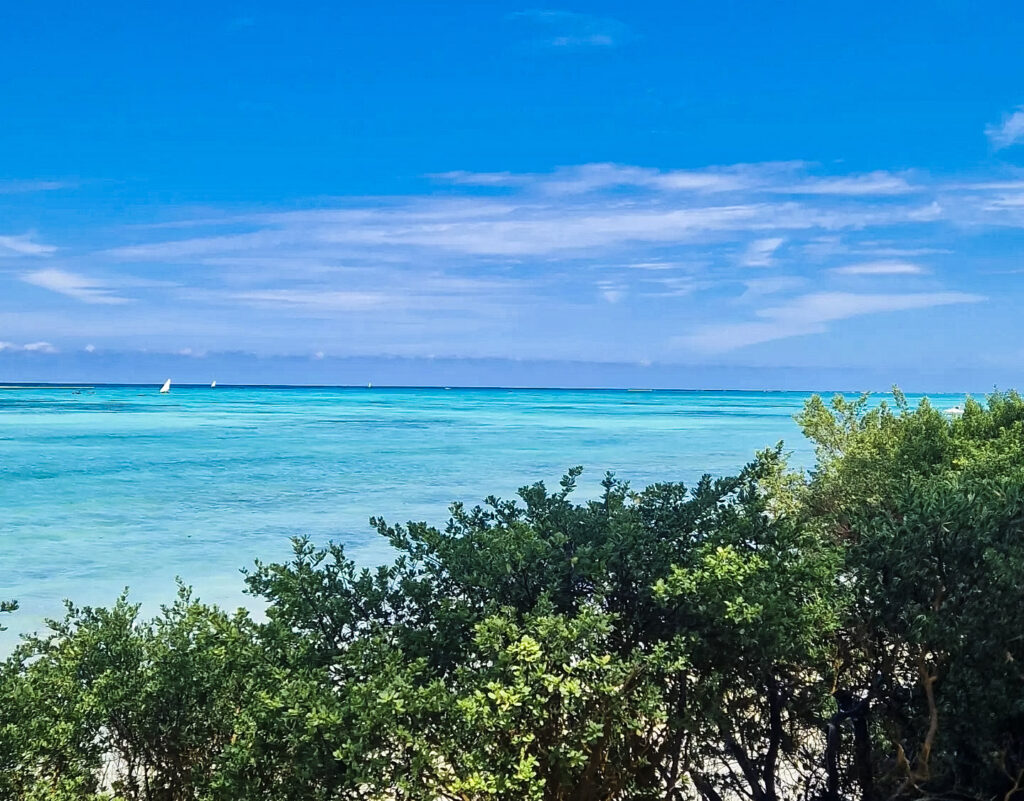
One of the most important aspects to know before organizing a trip to Zanzibar is the tidal phenomenon. L’isola, infatti, offre esperienze molto diverse a seconda della zona in cui si sceglie di soggiornare. In particolare, conoscere la differenza tra Zanzibar north o east it is essential to understand what type of sea you will find during your holiday.
Find out where to stay in Zanzibar and how the tides work: https://www.mamaduniatravel.com/zanzibar-maree-dove-alloggiare/
18. Beware of rainy seasons
If you don't want to find yourself facing heavy rain during your trip, avoid the heavy rainy season, which goes from end of March/April until May/June. During this period, precipitation can be heavy and continuous, making some excursions and outdoor activities difficult or impossible.
The period of small rains is different, generally in November and December; in these months brief showers may occur which do not compromise the holiday.
Read the article dedicated to the climate of Zanzibar to find out more: https://www.mamaduniatravel.com/quando-andare-a-zanzibar-clima-e-periodo-migliore/
19. What to bring to Zanzibari children?
If you like, you can pack clothes that you no longer use and donate them to the needy or to local nurseries. Soaps, notebooks and pencils can be purchased on site to support the local economy.
If you wish to visit a local village, do so together with a guide who will help you distribute the gifts without creating small crowds of children. You will definitely hear screaming cheek cheek, it's candy! However, for their dental health, it would be best to avoid them.
Remember that giving money directly to children may not be the best approach, as it can create addiction or promote unsustainable behavior. It is better to opt for alternative forms of support, such as donating to schools or local authorities.
20. Respect local customs in Zanzibar
It might seem like a banal recommendation but not everyone follows it: it is important to respect local customs. When visiting the villages and Stone Town, it is best to wear clothes that cover your legs and avoid low-cut shirts.
21. Ask permission before taking photographs
When photographing people, it is important to use discretion and care to determine whether the person wishes to be photographed.
In some local communities they persist traditional beliefs according to which photography, especially with the telephone, can have a negative spiritual meaning. This is why it is important Always ask permission before taking photos and respect any refusal.
22. I beach boys a Zanzibar: cosa sapere
In Zanzibar, especially in the tourist areas, you may encounter the so-called "beach boys". They are young locals who often offer tours and boat trips, sell souvenirs or various experiences. Their offers are not always regulated: some can be very insistent or exaggerate on prices.
TRAVEL CONSCIOUSLY
Don't touch the starfish! Starfish only need a few seconds out of the water to die of an embolism even days later and even if they are put back in the water. Unfortunately, the habit of taking selfies with them and pulling them out of the water is still widespread in East Africa. Frequently, it is the guides themselves who take them with their hands to please the tourists, not aware of causing environmental damage!
I hope this list of things to know before going to Zanzibar combined with some advice, help you spend an unforgettable holiday and have a good trip!
SOME CURIOSITIES ABOUT ZANZIBAR
- Did you know that Zanzibar is actually the name of the entire archipelago made up of many islands? The two main islands are Unguja, the one we all know and Pemba. There are over forty smaller islands around it.
- The name Zang-i bar probably derives from Persian and means "land of blacks".
- The seaweed that is harvested at low tide is dried and used for the production of soaps and body products.
- Stone Town thanks to its variety and cultural particularity, it is declared a UNESCO heritage site. It was in this city that Freddie Mercury was born.
- The giant tortoises of Prison Island they were imported from the Seychelles by the sultan of the island.
- Foreigners are called white man, in Swahili language means “white man”. The term dates back to the colonial period and has no offensive connotations.


0 Comments